
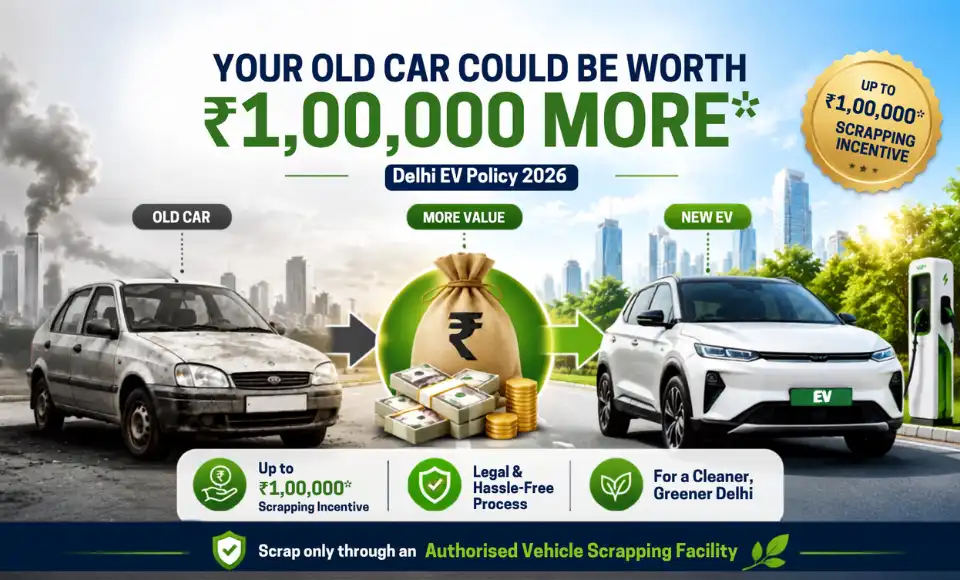
Delhi EV Policy 2026
What Car Owners Need to Know About Car Scrapping and EV Subsidies
As Delhi continues its efforts to improve air quality and encourage cleaner transportation, the proposed Delhi EV Policy 2026 introduces several measures that could benefit vehicle owners planning to switch to electric vehicles (EVs). One of the most talked-about proposals is the introduction of scrapping incentives for eligible old vehicles, making it easier for residents to adopt electric mobility while responsibly disposing of aging vehicles. The policy outlines incentives, EV infrastructure expansion, and phased electrification to reduce pollution and accelerate EV adoption.
What Is the Delhi EV Policy 2026?
The Delhi EV Policy 2026 is a policy introduced by the Government of NCT of Delhi with the objective of promoting electric vehicles, reducing vehicular emissions, and improving the city’s air quality. The policy proposes financial incentives for EV buyers, expansion of charging infrastructure, battery recycling initiatives, and incentives for scrapping eligible old vehicles through authorised facilities. It also includes phased electrification targets for different vehicle categories over the coming years.
Why Is the Delhi EV Policy 2026 Important?
The proposed Delhi EV Policy 2026 is more than just an incentive scheme for electric vehicles, it reflects Delhi’s long-term vision to reduce air pollution, encourage cleaner transportation, and gradually transition the city towards electric mobility. Since vehicular emissions remain one of the major contributors to air pollution in Delhi, the policy focuses on accelerating EV adoption while supporting responsible disposal of older, more polluting vehicles.
For vehicle owners, this policy is important because it not only proposes financial benefits for purchasing electric vehicles but also encourages authorised vehicle scrapping, expansion of charging infrastructure, battery recycling, and cleaner mobility solutions across different vehicle categories. Understanding its proposed provisions can help vehicle owners prepare for future opportunities.
How Does the Policy Affect Car Owners?
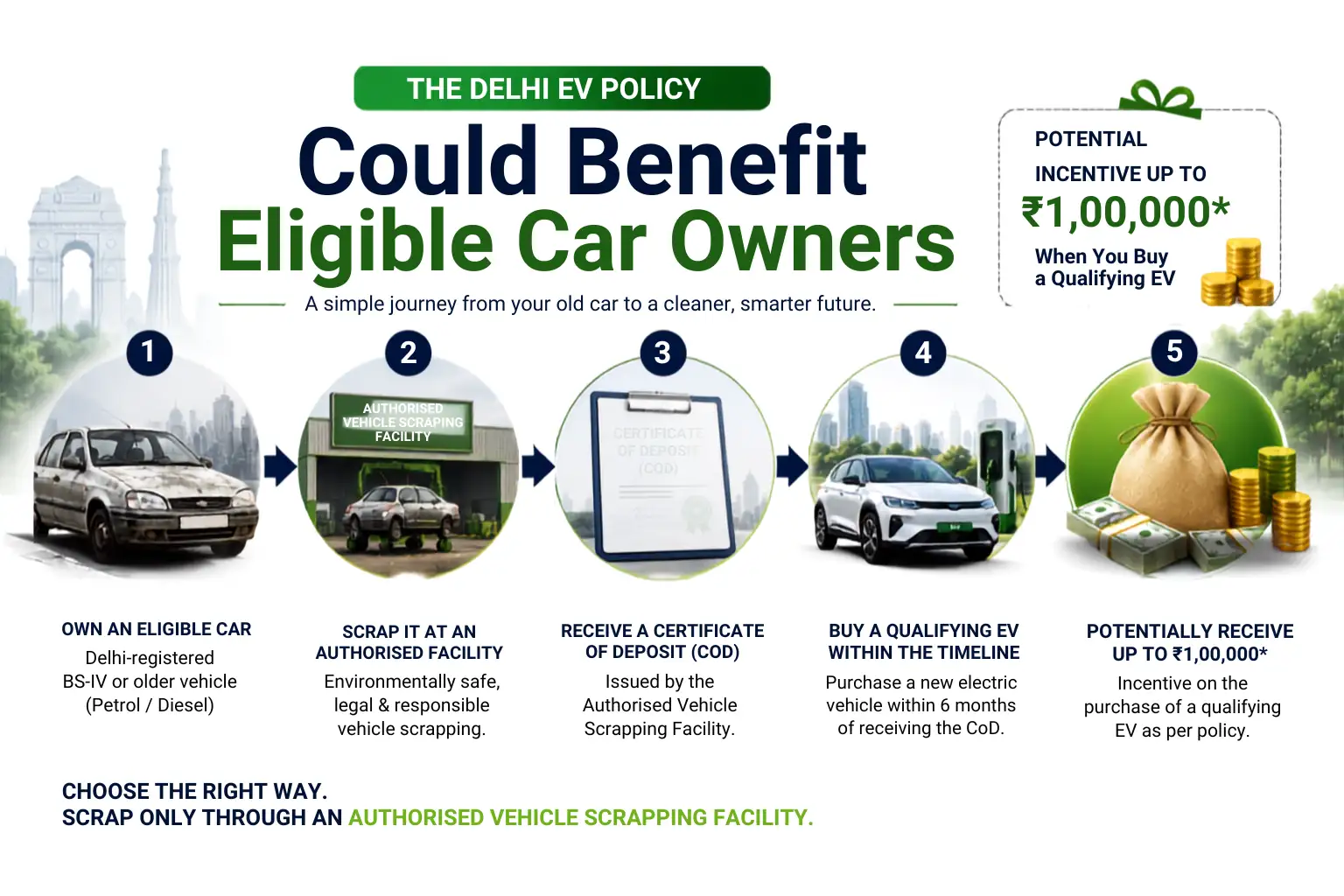
For private vehicle owners, the proposed policy creates an opportunity to replace older, more polluting vehicles with cleaner electric alternatives. Under the policy, owners of Delhi-registered BS-IV and older cars will get scrapping incentives of up to ₹1,00,000 if they purchase a new electric car within six months of scrapping their old car and receiving a Certificate of Deposit (CoD) from a Registered Vehicle Scrapping Facility (RVSF).
Proposed Incentives Across Different Vehicle Categories
Although many discussions have focused on the proposed ₹1,00,000 scrapping incentive for private electric cars, the Delhi EV Policy 2026 also includes incentives for several other vehicle categories.
Some of the major proposed incentives include:
- Electric Two-Wheelers: Purchase incentives of up to ₹30,000 during the first year of the policy, reducing in subsequent years for eligible vehicles.
- Electric Auto Rickshaws (L5M): Incentives of up to ₹50,000 for eligible vehicles.
- Electric Four-Wheeler Goods Vehicles (N1): Purchase incentives of up to ₹1,00,000.
- Scrapping Incentives: Additional proposed incentives for eligible BS-IV and older vehicles, including two-wheelers, three-wheelers, private cars, and N1 goods vehicles when replaced with qualifying electric vehicles within the prescribed timeline.
Why Car Scrapping Matters
Old vehicles contribute significantly to urban air pollution due to outdated emission standards and declining engine efficiency. Choosing car scrapping in Delhi through an authorised facility ensures that your vehicle is dismantled and recycled in an environmentally responsible manner.
Professional vehicle recycling also helps recover valuable materials such as steel, aluminium, copper, rubber, and plastics, reducing waste and supporting a circular economy. More importantly, authorised scrapping provides the required documentation, including the Certificate of Deposit, which is necessary for claiming applicable benefits under government schemes.
Why Authorised Vehicle Scrapping Is More Important Than Ever
The proposed policy places significant importance on authorised vehicle scrapping because the Certificate of Deposit (CoD) issued by a Registered Vehicle Scrapping Facility (RVSF) is the essential document for claiming applicable scrapping incentives.
Apart from supporting eligibility under the proposed policy, authorised scrapping also ensures:
- Environmentally responsible dismantling of vehicles.
- Proper recycling of metals, plastics, rubber, glass, and other reusable materials.
- Safe disposal of hazardous components such as batteries, oils, and fluids.
- Legal deregistration and complete documentation.
- Compliance with the Government's Vehicle Scrapping Policy.
Choosing an authorised scrapping facility protects vehicle owners from legal complications while contributing to cleaner and more sustainable vehicle recycling.
Road Tax and Registration Fee Benefits
Apart from purchase and scrapping incentives, the Delhi EV Policy 2026 also proposes significant savings at the time of vehicle registration.
Under the policy:
- Eligible electric vehicles registered in Delhi are proposed to receive 100% exemption from road tax and registration fees during the policy period.
- Electric cars with an ex-showroom price of up to ₹30 lakh are eligible to receive full exemption from road tax and registration charges.
- Strong Hybrid Electric Vehicles may receive partial road tax benefits.
- Electric cars priced above ₹30 lakh may not receive any exemptions.
Understanding the Proposed EV Subsidy in Delhi
The policy includes incentives across multiple EV categories, including two-wheelers, three-wheelers, commercial vehicles, and private electric cars, along with exemptions from road tax and registration fees for eligible vehicles. It also proposes investments in public charging infrastructure and battery recycling to make EV ownership more convenient and sustainable.
The overall direction reflects Delhi’s commitment to cleaner transportation and reduced dependence on conventional fuel-powered vehicles.
Growing EV Infrastructure in Delhi
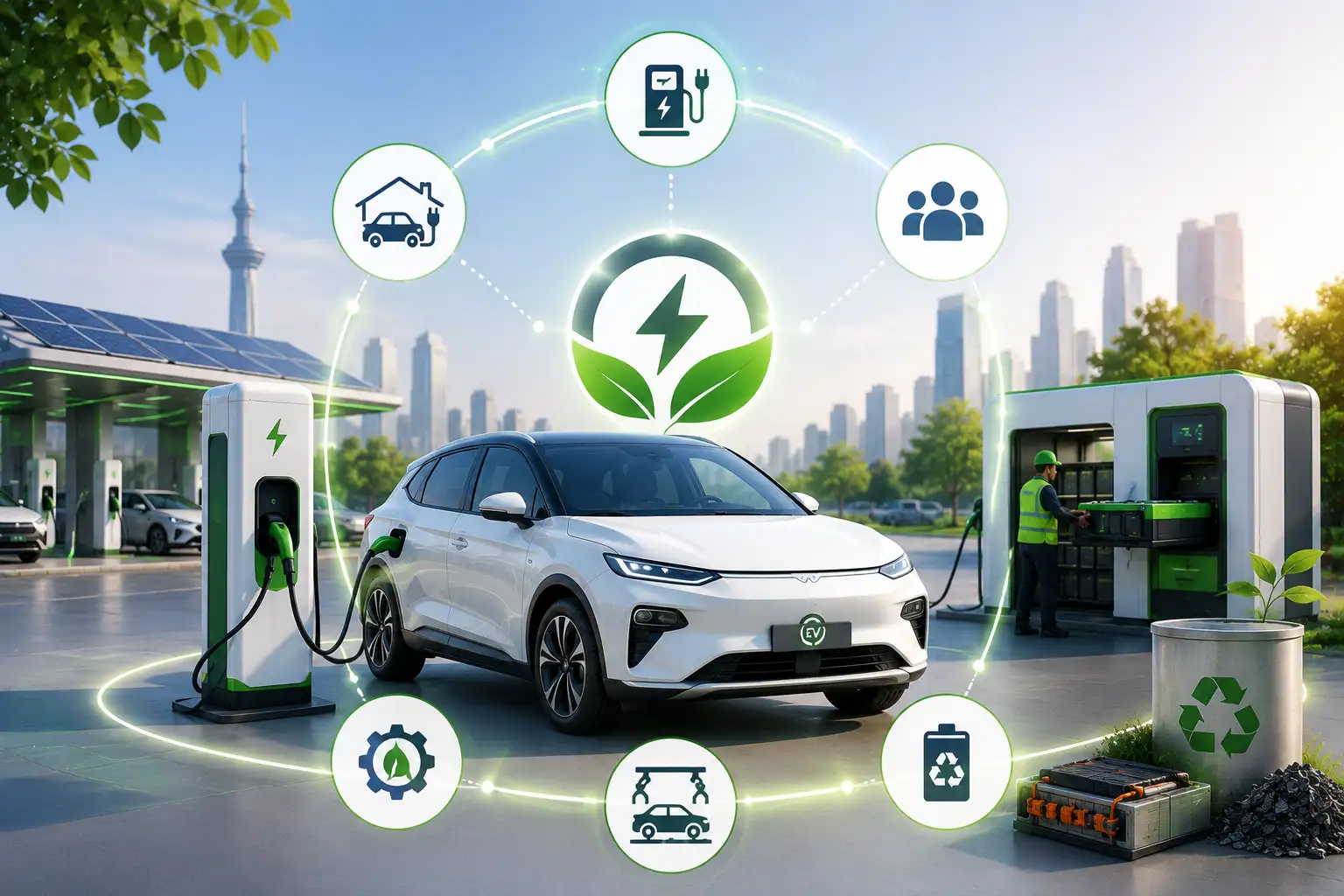
One of the biggest concerns for people considering an electric vehicle is charging convenience. The Delhi EV Policy 2026 proposes significant expansion of Delhi’s EV charging ecosystem through additional public charging stations, community charging facilities, and battery swapping infrastructure.
The policy also focuses on creating a stronger support system by promoting battery recycling, improving charging accessibility, encouraging OEM participation, and strengthening the overall EV ecosystem. These initiatives aim to make electric vehicle ownership more practical and convenient for residents over the coming years.
Things to Consider Before Scrapping Your Car
If you are planning to replace your old vehicle, keep these points in mind:
- Use only an authorised vehicle scrapping facility - Registered Vehicle Scrapping Facility (RVSF)
- Ensure you receive the Certificate of Deposit (CoD) after scrapping.
- Complete the purchase of an eligible electric vehicle within the required timeline, if applicable.
- Keep all documentation safely for future reference.
Following the correct process helps ensure legal compliance and may make you eligible for available incentives.
Looking Beyond Incentives
While financial incentives are an important aspect of the proposed policy, the larger objective is to improve Delhi’s air quality by gradually reducing dependence on older, high-emission vehicles.
The policy also proposes phased electrification across several vehicle categories over the coming years, including two-wheelers, auto-rickshaws, commercial fleets, school buses, and government vehicles. Together with expanded charging infrastructure and battery recycling initiatives, these measures aim to support Delhi’s transition towards cleaner and more sustainable transportation.
Need Help Understanding the Delhi EV Policy 2026?
The Delhi EV Policy 2026 is currently in form and contains several proposed incentives, eligibility conditions, timelines, and documentation requirements that may vary depending on the type of vehicle you own. As a result, many vehicle owners may find it difficult to understand how the proposed policy could apply to their specific situation.
At ScrapMyCar, we have closely followed the development of the Delhi EV Policy 2026 from the beginning. Our team was present during the stakeholder consultation process where the policy was discussed, giving us valuable insight into the proposed provisions and their practical implications.
If you’re unsure whether your vehicle may qualify for the proposed scrapping incentive, want to understand the importance of the Certificate of Deposit (CoD), or simply need clarification on any aspect of the policy, our team is happy to help explain it in simple and easy-to-understand language.
How ScrapMyCar Can Help
Conclusion
The proposed Delhi EV Policy 2026 represents an important move toward cleaner mobility and improved air quality. For vehicle owners, it could create valuable opportunities through EV subsidy Delhi proposals and incentives linked to responsible vehicle scrapping. Understanding its provisions today can help you make informed decisions when planning to replace an older vehicle.
If you own an aging car and are considering the switch to electric mobility, staying updated on the policy and choosing authorised car scrapping in Delhi will help ensure you are well prepared to benefit from any future incentives.